The Architecture of Joy Why a Swing Set is More Than Cedar and Rope
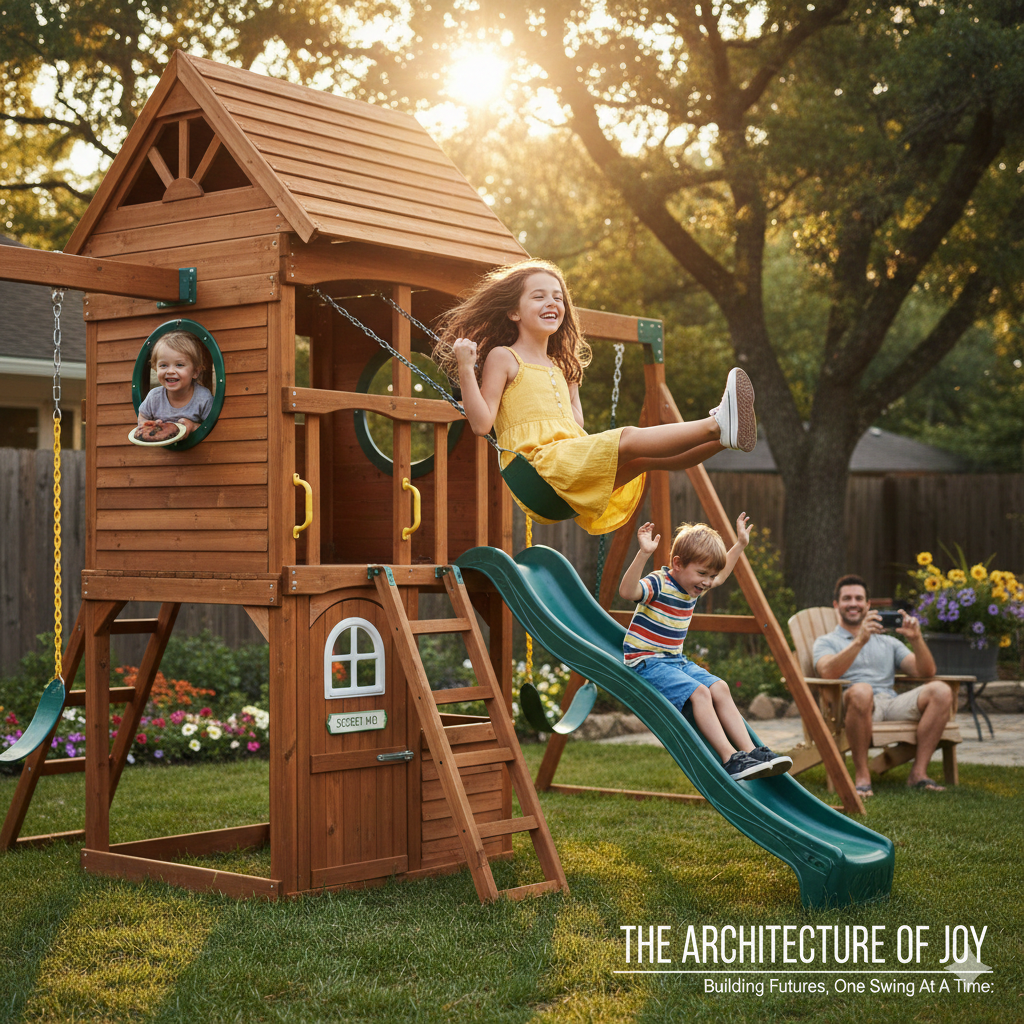
The world moves fast. We spend our days chasing deadlines, scrolling through feeds, and navigating the heavy complexities of “being an adult.” But in the backyard, tucked between the oak tree and the fence, stands a quiet rebellion against the rush The Playhouse Swing Set.


To a passerby, it’s just wood and hardware. But if you look closer—through the eyes of a child or the heart of a parent—it’s a sanctuary of possibility.
1. The Flight Toward Bravery
Every time a child kicks their legs toward the clouds, they aren’t just swinging; they are learning to conquer gravity. That fleeting moment of weightlessness at the peak of the arc is their first taste of freedom. It teaches them that to reach new heights, you have to find your rhythm, trust the ropes, and sometimes, just let go of the ground.
2. The Kingdom of “What If”
The playhouse isn’t a box; it’s a castle, a spaceship, a secret laboratory, or a quiet cafe serving the finest “mud-pie” lattes. In this small wooden footprint, children practice the most important adult skill there is: Vision. They learn that the world isn’t just what you see, but what you have the courage to imagine.
3. The Anchor of Presence
For a parent, the swing set is a rare “unplugged” zone. It’s the sound of rhythmic chains, the chorus of “Watch me, Mommy!”, and the sun setting over tired, happy shoulders. It reminds us that success isn’t measured in digits, but in decibels of laughter.
The Lesson: We don’t stop playing because we grow old; we grow old because we stop playing. A playhouse isn’t an expense; it’s an investment in the spirit of “Yes.”
Why This Matters Today
In a digital age, giving a child a physical space to climb, slide, and dream is an act of love. It builds resilience (from the scraped knees), social intelligence (from the shared slides), and pure, unadulterated joy.
So, look at that swing set again. It’s not just backyard equipment. It’s a launchpad for the soul. It’s where the best parts of us—the curious, the brave, and the joyful—go to grow.
Understanding the Concept of Joy in Architecture
Joy in architecture is a multifaceted concept that intertwines philosophical and psychological principles with the built environment. At its core, joy refers to a profound sense of happiness, contentment, and emotional well-being that architecture can evoke in individuals. The aesthetic qualities, spatial arrangements, and sensory experiences offered by buildings and spaces all play crucial roles in eliciting these positive emotions.
Philosophers and psychologists have long explored the relationship between the environment and emotional responses. Theories such as environmental psychology highlight how elements like natural light, openness, and the natural environment can significantly impact an individual’s mood and state of mind. Architecture that incorporates these principles, such as large windows for natural light or greenery for visual and spatial relief, often fosters joy and comfort.
Moreover, studies indicate that design elements that facilitate social interactions and communal gatherings contribute significantly to feelings of happiness. Spaces that encourage participation and engagement, such as parks, plazas, and community centers, are often viewed as joyful places, as they provide opportunities for personal connections and shared experiences.
Numerous examples of joyful architecture can be identified, showcasing how thoughtful design can lead to happiness. Structures like the Sydney Opera House, with its stunning visuals and unique forms, or the Bilbao Guggenheim Museum, which captivates visitors through its innovative design, serve as exemplary cases where architecture does not merely fulfill functional requirements but also elicits joy. Each of these buildings illustrates that the right architectural decisions can lead to spaces that inspire happiness and a sense of belonging.
Key Design Principles that Foster Joy
Creating joyful spaces requires a thoughtful approach to design, deeply rooted in principles that resonate with human emotions. One of the most impactful elements of design is color theory. Colors can evoke a wide range of feelings, from calmness to excitement. For instance, incorporating warm colors such as yellows and oranges can create a welcoming environment, while cool colors like blues and greens often promote tranquility and relaxation. This psychological effect of colors plays a significant role in how individuals experience a space.
Another crucial design principle is the use of natural light. Ample exposure to sunlight not only enhances the aesthetic quality of a space but also positively affects mood and productivity. Daylight helps regulate our circadian rhythms and can lead to improved mental health outcomes. Architecturally, large windows, skylights, and open floor plans can facilitate the entry of natural light, fostering a vibrant atmosphere. For example, the design of the Stanford University Graduate School of Business emphasizes light-filled spaces that encourage collaboration and creativity.
Open spaces are equally important in promoting feelings of joy. They provide room for movement, social interaction, and a sense of freedom. By avoiding cramped layouts, designers can create areas that invite exploration and connection among individuals. This principle can be observed in public parks, which often feature open green spaces that encourage gatherings and leisure activities.
Lastly, the integration of nature into built environments significantly affects human wellbeing. Biophilic design, which emphasizes the connection between nature and people, has proven to enhance mood. Including elements such as indoor plants, gardens, and natural materials can bridge the gap between the indoor and outdoor worlds. For instance, the High Line in New York City is a remarkable example of how urban architecture can harmoniously integrate nature, offering a rejuvenating experience within the city’s framework.
Case Studies: Successful Joy-Inspired Architectural Projects
In recent years, numerous architectural projects have successfully integrated the principles of joy into their designs, enhancing the experiences of their users and communities. These projects serve as practical illustrations of how thoughtful design can promote happiness and foster social connections.
One such example is the Hello Wood project in Hungary, which aims to create a playful environment for children and families. This architectural endeavor comprises a series of wooden structures that encourage interaction and creativity. By utilizing natural materials and incorporating whimsical elements, the project not only contributes to playfulness but also promotes sustainable practices, thus enhancing the overall well-being of those who use the space.
Another remarkable case is the Vitra Fire Station designed by Zaha Hadid in Germany. The building, with its bold, dynamic forms, seeks to challenge conventional perceptions of a fire station. Its open spaces encourage community engagement and provide an inviting atmosphere for visitors. This architectural choice has positively influenced local social dynamics, inviting citizens to feel a sense of belonging and joy while interacting with the space.
Additionally, the Seattle Central Library, designed by Rem Koolhaas, embodies the concept of joy through its innovative design. The library fosters a sense of exploration and discovery, allowing individuals to engage with the vast collections of knowledge within. The unique use of glass and light creates an uplifting environment that inspires users to immerse themselves in learning and community activities.
In each of these successful architectural projects, design choices are meticulously crafted to enhance feelings of joy among users. By focusing on community interaction, sustainable practices, and the overall emotional experience, architects have demonstrated the profound impact that well-considered built environments can have on happiness and social connectivity. This approach to architecture not only enriches individual experiences but also contributes to the well-being of entire communities.
Future Directions: Designing for Joy in Urban Environments
As cities continue to expand and populations grow, the challenge of incorporating elements that promote joy and emotional well-being in urban architecture becomes increasingly important. The future of architectural design is poised to leverage emerging trends and technologies aimed at creating uplifting environments. These designs will focus on enhancing community interactions and individual happiness, which are essential in meeting the needs of modern urban dwellers.
One prominent trend is the use of biophilic design, which incorporates natural elements into urban settings. Research indicates that exposure to nature significantly improves mood and reduces stress. As such, integrating green roofs, living walls, and urban gardens into buildings can create more pleasant atmospheres, fostering happiness among residents and visitors alike. Furthermore, the implementation of sustainable practices in urban architecture can enhance a feeling of interconnectedness with the environment, contributing to overall emotional well-being.
Technology also plays a crucial role in this evolution. Smart buildings equipped with adaptive systems that respond to occupants’ needs can create tailored environments that enhance comfort and joy. For instance, using data to optimize lighting, air quality, and space configuration can lead to increased satisfaction in urban living. Moreover, the rise of augmented and virtual reality can help architects and designers visualize how joyful elements can be incorporated into spaces before they are constructed, allowing for more effective planning.
However, challenges remain in implementing these joy-focused designs within urban landscapes. Limited space, zoning regulations, and budget constraints often hinder creativity. It is crucial for architects to advocate for policies that prioritize well-being in urban planning. By collaborating with city officials and community members, architects can identify opportunities to incorporate joy-centered aspects into their designs, ultimately transforming urban environments into spaces of inspiration and happiness for all residents.